Effective water management around a building starts with controlling where rainwater and surface runoff travel. Paved areas such as driveways, parking lots, sidewalks, patios, and access roads can influence whether water moves safely away from the structure or collects near the foundation. A paving contractor can help shape these surfaces with appropriate slopes and elevations so water is directed toward drainage areas rather than allowed to pool against walls or foundation edges. Proper planning can reduce standing water, limit erosion, and support more consistent conditions around the building.
Designing the Correct Slope
One of the most important aspects of paving is establishing the right grade. Flat or poorly sloped pavement may allow water to remain in low areas after storms. If those low points are close to the building, moisture may repeatedly saturate soil near the foundation. Over time, changing soil moisture can contribute to movement or settlement in some properties. When foundation concerns already exist, professionals such as Bats Foundation Repair may evaluate whether drainage or soil conditions are contributing to structural movement while paving contractors address surface-level water management.
Preventing Water From Collecting Near Foundations
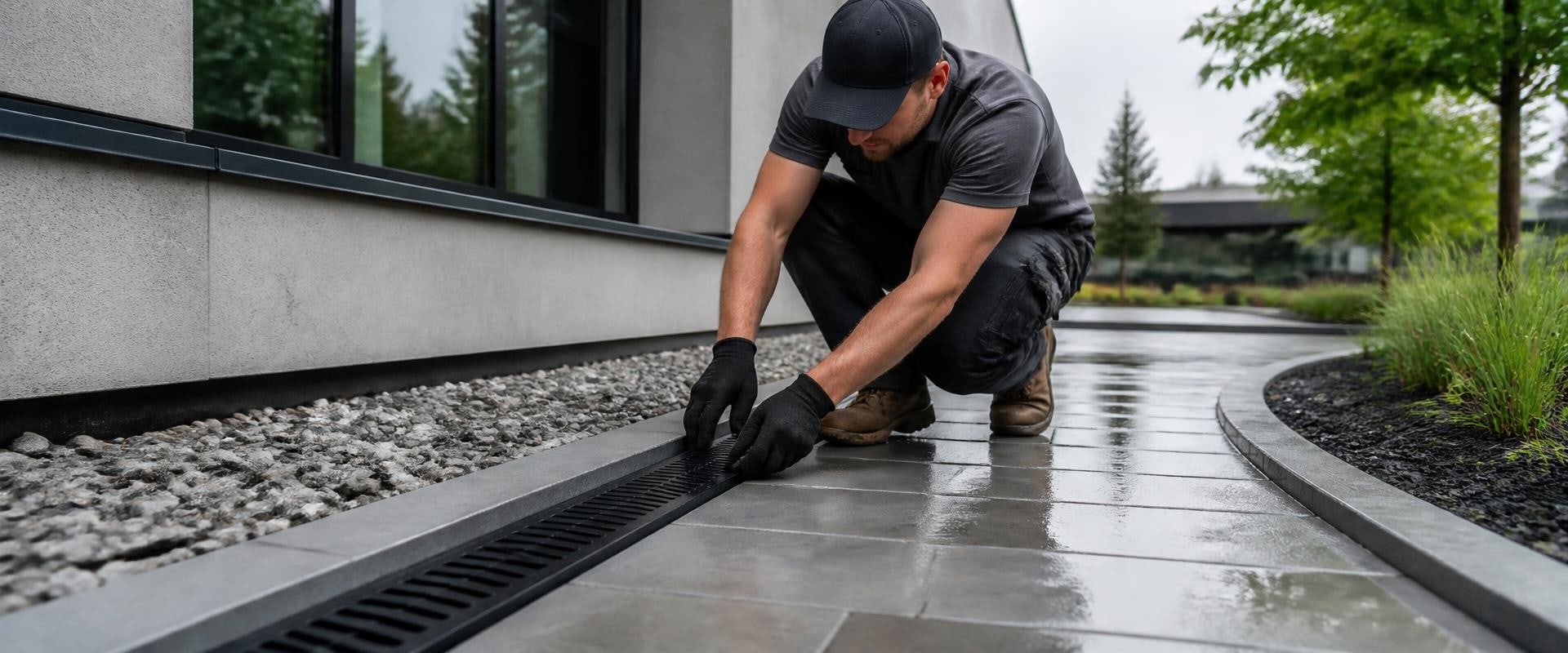
Paved areas should generally encourage water to move away from the building whenever site conditions allow. Driveways or sidewalks that slope toward a structure can direct significant amounts of runoff toward foundation walls. A paving contractor may be able to correct grades, rebuild sections, or incorporate drainage features to improve water flow. In some cases, channels, drains, curbs, or other systems may be needed to carry water toward an appropriate outlet. These improvements can be especially valuable where large paved surfaces collect substantial runoff during heavy rainfall.
Coordinating With Existing Drainage Systems
Paving should work together with the property’s broader drainage system. Gutters, downspouts, catch basins, French drains, storm drains, and landscaping all influence how water moves across the site. A paving contractor should consider where these systems discharge before determining pavement elevations. For example, directing runoff toward an area where water already collects can make drainage problems worse. Coordinating paving with existing drainage infrastructure allows water to follow a more controlled route away from structures and high-traffic areas.
Repairing Cracks and Depressions
Damaged pavement can interfere with effective water management. Cracks may allow water to penetrate beneath asphalt or concrete, while depressions can become collection points. Once water reaches the base beneath the pavement, it may contribute to erosion, weakening, or additional surface deterioration. Timely repair of cracks, potholes, and settled sections can help maintain proper drainage patterns and extend the life of paved surfaces. Larger settlement problems may require rebuilding the affected area rather than relying on temporary patching.
Considering Permeable Paving Options
In some projects, permeable paving materials may provide another way to manage runoff. These systems allow water to pass through the paved surface into a prepared base where it can drain gradually. Permeable pavement may reduce surface runoff when site conditions and local requirements make it appropriate. However, proper design and maintenance are essential to ensure the system continues functioning effectively.
Protecting the Property Through Better Water Control
A paving contractor contributes to more than the appearance and usability of outdoor surfaces. Proper grading, drainage coordination, pavement repair, and thoughtful material selection can all influence how effectively water moves around a property. By preventing runoff from collecting near foundations and reducing erosion around paved areas, these improvements may help limit moisture-related problems. Coordinating paving work with landscaping, drainage, and structural professionals can create a more complete water-management strategy that supports both the paved surfaces and the long-term condition of the building.